How to start my family history
Follow this straightforward four-step plan to start your family history with confidence – learn where to begin, how to uncover vital details, where to find essential records, and how to build your family tree online.

Quick links: how to start a family tree
Starting your family tree is an exciting journey, and we’re here to guide you every step of the way.
To help you begin with confidence, genealogist Mary Evans has created a simple, step-by-step four-week research plan, designed especially for beginners.
Plus, Family Tree editor Helen Tovey gives you tips and answers to common questions, to help you overcome early hurdles and make steady progress.
Your four-week plan to start a family tree
Start creating a family tree
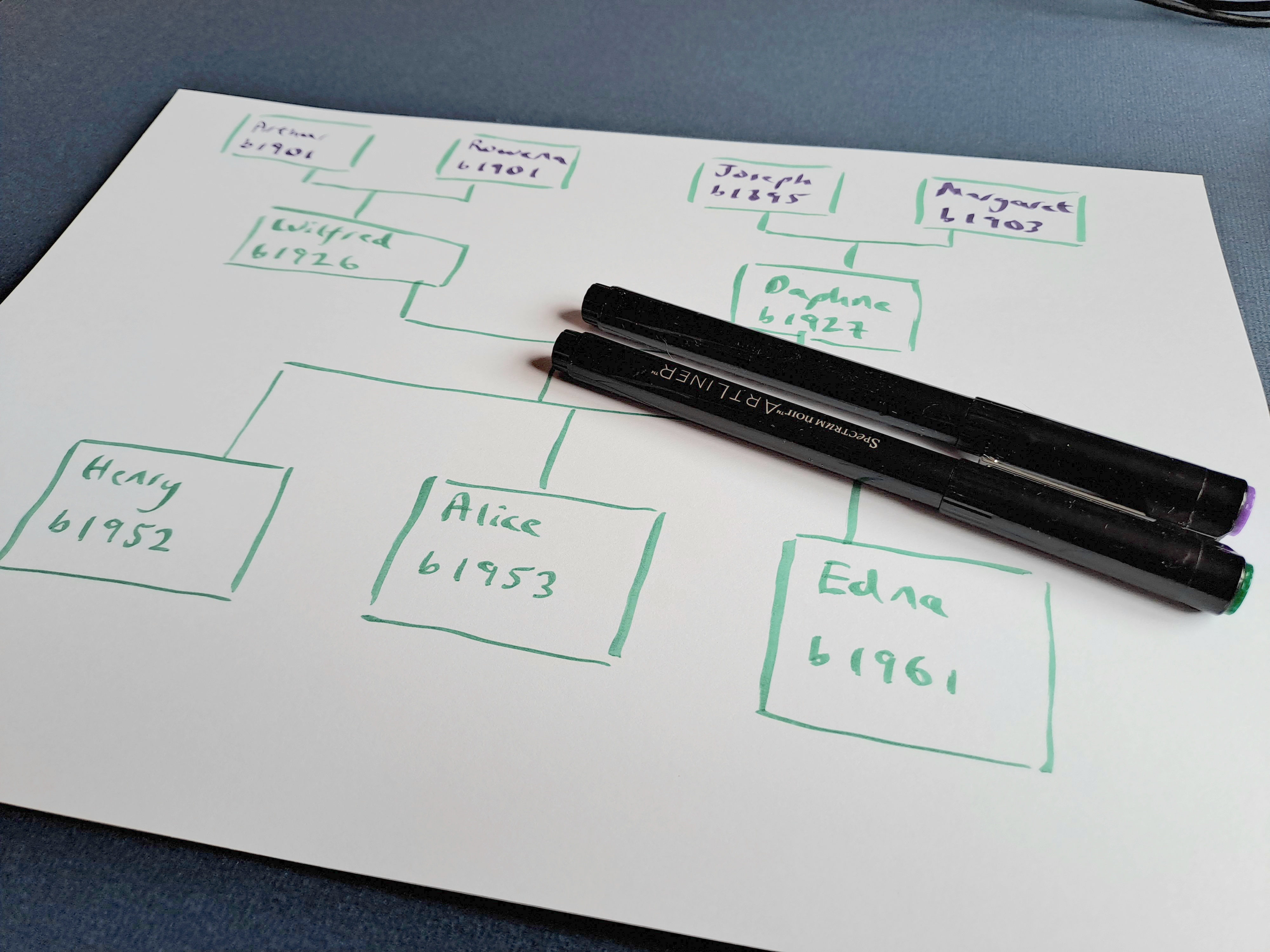
Begin by writing down what you already know, starting with yourself.
A simple tree with just names, dates and places is all you need at this stage. What supporting evidence do you have in the way of birth, marriage and death certificates? Make a note of any family stories you might have heard, but be aware that these are just stories and that you will probably have to verify their accuracy at some point.
One of your main early sources will be living relatives.
Make a list of ones you need to talk to and decide how they could be contacted. A worksheet of questions is always worth spending time on, too, so that you don’t miss any vital bits of information.
And don’t forget to sort out all those unnamed family photographs to take along with you too.
Use certificates to grow your tree
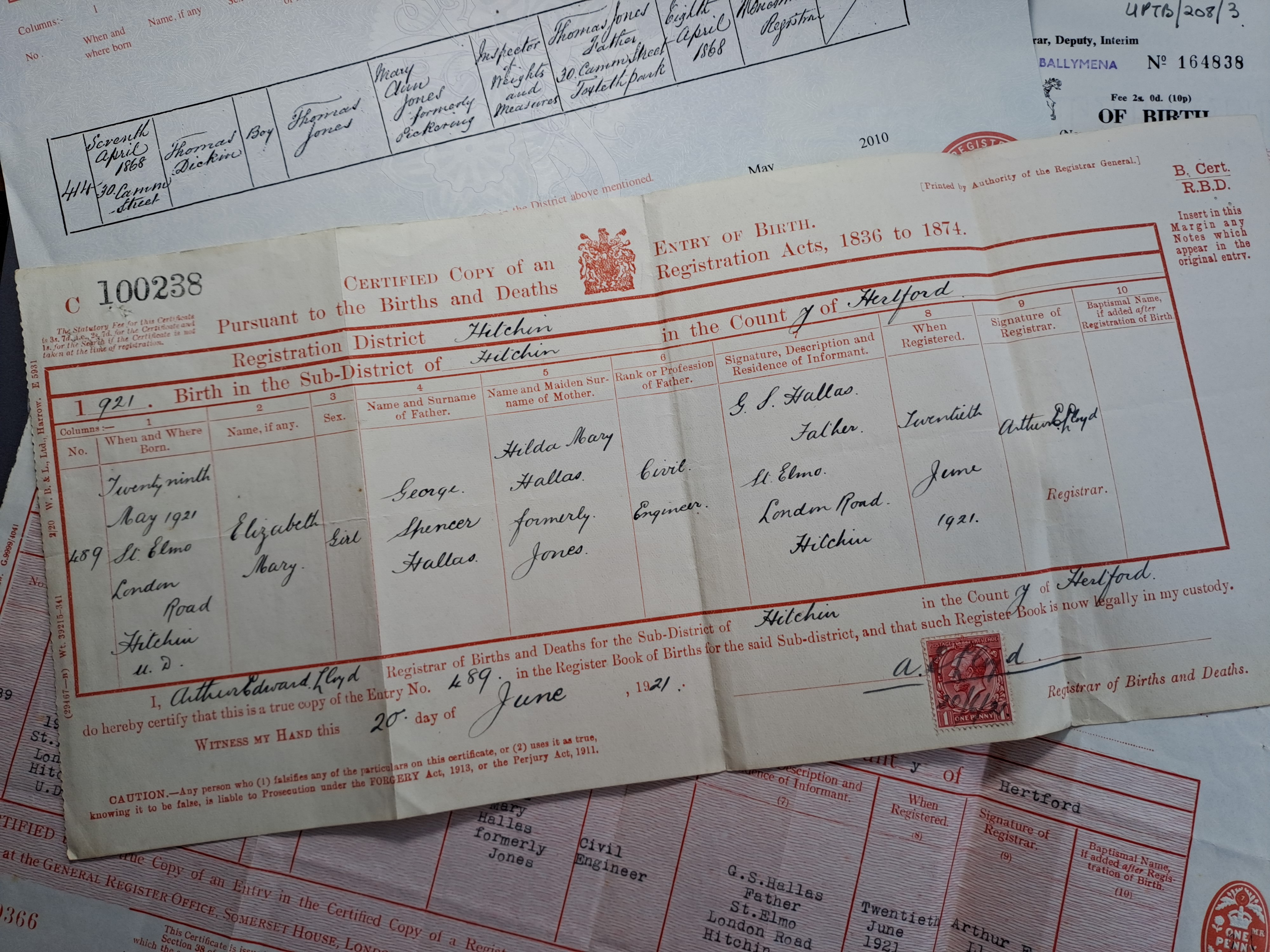
Once you have all your basic information organised, the next step will be to expand what you know with birth, marriage and death certificates.
Birth certificates will give you the names of parents including mother’s maiden name, while marriage certificates should give the names and occupations of fathers.
Death certificates should give an age, possibly an address and the name and address of the informant.
Certificates for England and Wales can be ordered online form the General Register Office for England and Wales.
For Scotland, Northern Ireland and the Republic of Ireland see:
- www.scotlandspeople.gov.uk
- www.nidirect.gov.uk/articles/ordering-life-event-certificates
- www.hse.ie/eng/services/list/1/bdm/Certificates
Expand your research horizons
In order to get further back you will next need access to birth, marriage and death indexes from 1837 onwards, census indexes, transcriptions and digitised images of records and parish register entries.
If you live in the same area as all your ancestors then you can probably use the local archives, but if not you can turn to one or more of the various websites that offer access to these resources. Now is the time to look carefully at these and decide which ones are going to be useful and might be worth subscribing to.
Look first, though, at some of the free websites:
FreeBMD has the post-1837 BMD indexes up until the mid-1970s and FreeCen has a great range of census indexes. FamilySearch has a huge range of worldwide records with the emphasis on parish registers.
Build your family archive
The task for the fourth week is to decide how you are going to record and store all the information that you will accumulate once your research really takes off.
Old photos, newspaper cuttings, cards, certificates and the countless odds and ends of family memorabilia need to be stored in suitable conditions if they are to be preserved for years ahead. There is a range of storage solutions available so try an internet search on ‘archival storage’.
If you work on a computer then there are various family history programs available that will store all your data and also produce a range of family trees for you. As with websites, it’s important to do some research before deciding which program is right for your needs.
Where can I find family history records?
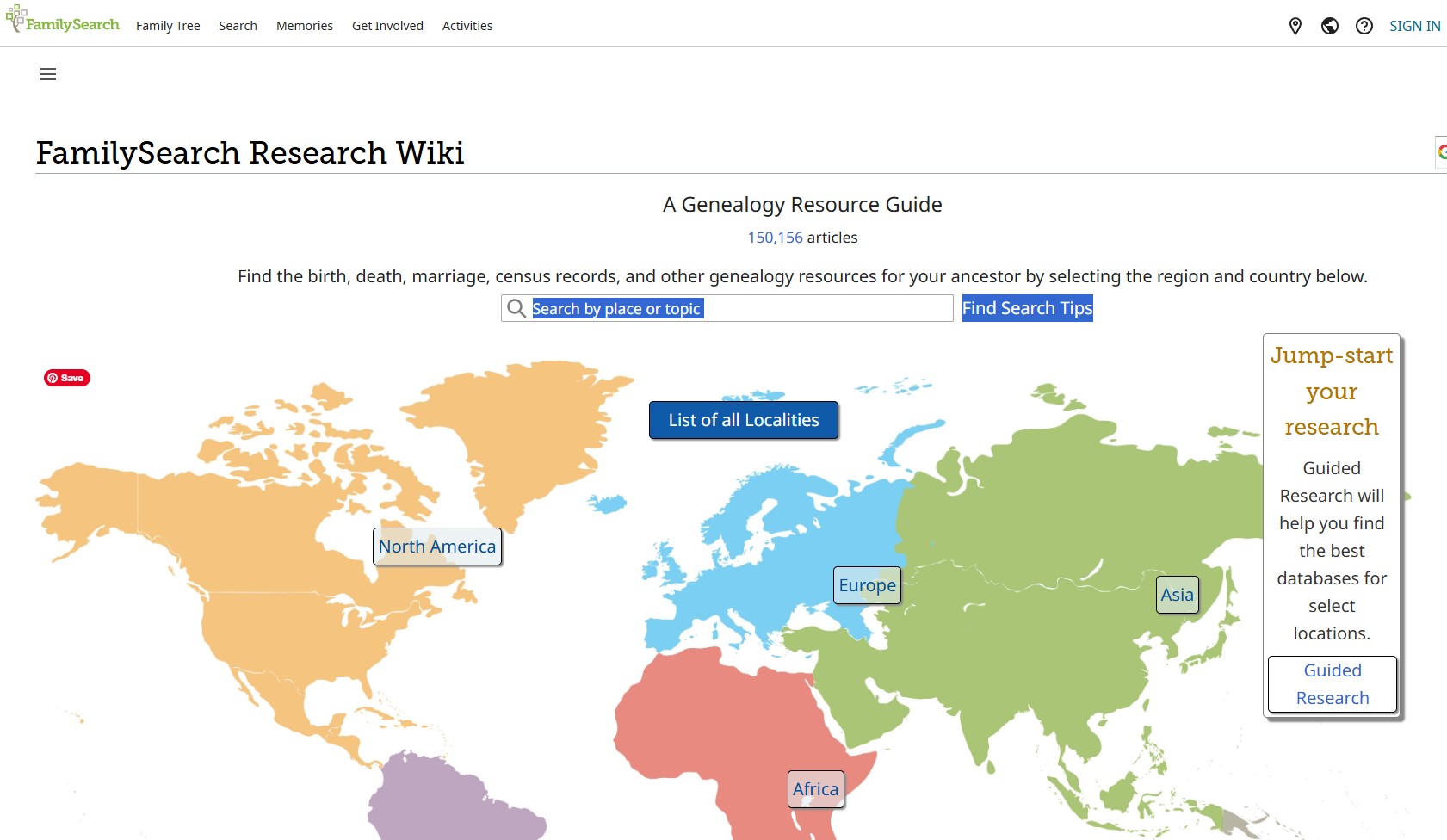
An excellent place to start finding out about the family history records available for your country/countries of interest is the FamilySearch wiki: www.familysearch.org/wiki/en/Main_Page
The FamilySearch wiki has nearly 150,000 genealogy topics worldwide that you can explore by place or record.
The best places to look for family history records will depend on where in the world your ancestors once lived and worked. Each country organises its genealogy records differently: some have many national collections, whereas others are held at a more localised level. Records are kept for different time periods, from one country to another, and some records have not survived the passage of time.
What sort of records are useful for family history?
You need to look for records that give individual people's names, plus further clues perhaps, such as to places, dates, occupations, and details of other people in their lives - whether family members, colleagues, or fellow sports or church friends and so forth.
Typically the sorts of records you are looking for are:
- census records
- birth, marriage and death records
- newspapers
Plus: electoral registers, phone books and trade directories, maps, military records, parish registers, passenger lists.
These are just a tiny selection of the many sorts of records that can be used for genealogy.
Where can I create an online family tree?
There are many platforms where you can create an online family tree, often for free, making it easy to organise your research, store records, and share your discoveries with relatives. These websites and tools typically allow you to add names, dates, photos, documents and even DNA results, helping you build a clear picture of your family history over time.
Popular options include:
- FamilySearch – a completely free resource with a collaborative global family tree and millions of historical records
- Ancestry – one of the largest genealogy platforms, offering powerful tree-building tools and access to extensive record collections
- Findmypast – particularly strong for UK and Irish records, with easy-to-use tree features
- MyHeritage – known for its smart matching technology and international record collections
- TreeView – a simple way to visualise and organise your family tree
- WikiTree – a community-driven, shared family tree focused on accuracy and collaboration
When choosing where to build your family tree, consider whether you want a free or subscription-based service, access to historical records, or the ability to collaborate with others. Many family historians try more than one platform before settling on the one that suits their research style best.
Will DNA help me with my family history?
Yes! DNA will certainly help you learn more about your family history. It will help you verify the family tree you are building and it will also be of vital assistance if you are seeking an unknown parent or grandparent, for instance. It is also extremely enjoyable to make connections with DNA matches – distant cousins with whom you may never have made contact otherwise.
As with all types of family history research, with DNA research you do need to be very aware that you may receive unexpected information about your relatives – or may even find new relatives.
If you were to receive such information you need to have a think about how you would feel, and if/how you might share such information with any relevant family members.
That said, for millions of people DNA testing is simply an excellent addition to the range of tools and resources that family historians use to trace their family trees.
You can read much more about using DNA for family history in our in-depth DNA Testing guides.
Take your time and be methodical
Get into the habit of looking carefully at every record you find. It’s tempting to rush on to the next thing. However, by taking the time to explore all the details you will be helping yourself to discover more – there and then.
How can I keep my family history organised?
Start with a simple filing system, with a ring binder, a folder on your computer/device, and a note book (or a digital Word document).
Central to keeping your family history organised is some sort of filing system and some sort of research log.
The filing system can be a folder(s) on your computer/device and backed up to the cloud, for instance. Or the filing system could be ring binders, organised by your four grandparent branches, for instance.
A family history research log is a record of the things you have done in your family tree research. It can be paper or digital, and needs to include the following information:
- Date of research (i.e. today's date)
- What & where you were researching
- What you found (and what you didn’t find)
- What you want to find out next time
What do you want to find out when doing your family history?
This is a great question to ask. It might seem a silly or obvious, but by keeping this question in mind you will keep your thoughts organised, and your eyes on the prize (your research goal).
You may have a very specific family history question that you're seeking the answer to. If you don't here are some ideas of family history research questions to set yourself to help you formulate your plan.
- I'd like to trace my family tree (building back to all my great-great-grandparents).
- I'd like to trace our Scottish ancestors.
- I'd like to find out what Grandma did in the war.
- I'd like to discover when and why the family migrated to Australia.
Family history is such a fascinating hobby and you are sure to find that there are lots of things you'd like to find out as you research your family tree.
 Get more advice with the weekly Family Tree newsletter
Sign up to receive the newsletter and enjoy a friendly weekly email filled with expert tips, practical advice, inspiring ideas and special offers.
As a welcome gift, we’ll also send you a free resource kit, featuring interview sheets, family tree charts and more to help you get started.
